Old Kashmir Photos: River Jhelum, Dal Lake & Street Scenes
A collection of old photographs showing everyday life and movement in Srinagar and other parts of Kashmir from the 1860s to the 1980s. The pictures include historical views of the River Jhelum with wooden bridges, boats, and waterfront buildings; a postcard of river traffic and settlements against mountains; a flower seller on Dal Lake in 1968; horses for rent and the valley meadows in Sonamarg in 1980; Kashmiri women and children in a garden during the 1970s–1980s; shikara boats at Dalgate on Dal Lake; the Jhelum River Bund area with houseboats and poplar trees; a young Kashmiri girl in traditional attire from the 1860s–1880s; and a busy Srinagar street scene with transport and pedestrians from the 1960s–1970s. Simple views of daily routines in old Kashmir.
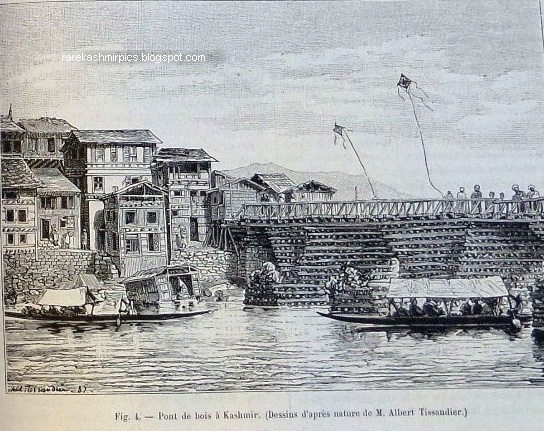
This captivating 19th-century engraving by French artist M. Albert Tissandier beautifully depicts a traditional wooden bridge spanning the Jhelum River in old Srinagar, Kashmir, with multi-storied timber houses featuring latticed windows lining the riverbanks, covered boats carrying passengers gliding beneath, and locals crossing the bridge while kites soar in the cloudy sky—a masterful sketch that vividly captures the architectural charm, daily river life, and serene atmosphere of historic Srinagar during the late Dogra era.

This evocative early 20th-century black-and-white postcard offers a serene historical glimpse of the Jhelum River flowing through the heart of old Srinagar, Kashmir, where the calm waters are dotted with traditional wooden doonga boats and smaller shikaras used for daily transport and trade, while densely packed waterfront settlements with multi-storied timber houses, flat roofs for drying goods, and ghats line both banks, framed by leafless chinar trees and grand riverside buildings under a cloudy sky—a captivating portrayal of the city's vibrant riverine life, architectural heritage, and timeless dependence on the Jhelum as its lifeline during the Dogra era when Srinagar's unique amphibious culture thrived.

This evocative early 20th-century black-and-white postcard offers a serene historical glimpse of the Jhelum River flowing through the heart of old Srinagar, Kashmir, where the calm waters are dotted with traditional wooden doonga boats and smaller shikaras used for daily transport and trade, while densely packed waterfront settlements with multi-storied timber houses, flat roofs for drying goods, and ghats line both banks, framed by leafless chinar trees and grand riverside buildings under a cloudy sky—a captivating portrayal of the city's vibrant riverine life, architectural heritage, and timeless dependence on the Jhelum as its lifeline during the Dogra era when Srinagar's unique amphibious culture thrived.

This nostalgic color photograph from 1980 vividly captures the rustic charm of everyday tourism life in Sonamarg, Kashmir—the "Meadow of Gold"—where a group of saddled ponies and horses stand ready for hire outside simple wooden huts and shops serving as pony stands, with local handlers in traditional attire tending to the animals amid a dusty foreground, while colorful tourist rest houses and cottages dot the lush green hillside rising steeply behind, enveloped in dense pine forests under a clear sky—a heartfelt reminder of the valley's classic pony trek culture that drew adventurers to explore nearby glaciers like Thajwas during Kashmir's vibrant tourism peak before modern roads transformed the experience.

This evocative color photograph from 1980 beautifully captures the pristine and tranquil expanse of Sonamarg valley in Kashmir—the legendary "Meadow of Gold"—where vast open green meadows stretch across the high-altitude plateau, dotted with a few scattered tourist rest houses and wooden huts with sloping roofs in the foreground, winding trails leading into the distance, and majestic snow-capped Himalayan peaks towering dramatically against a partly cloudy sky, with patches of early snow still lingering on the slopes—a serene snapshot of Sonamarg's untouched natural splendor and peaceful isolation during the final years of Kashmir's classic tourism era, when it remained a haven for trekkers and nature lovers seeking the raw beauty of the high meadows before modern development transformed the landscape.

This charming color photograph from the 1970s-1980s offers a heartwarming glimpse into everyday family life in Kashmir, capturing a group of Kashmiri women and children dressed in vibrant traditional pherans and headscarves, gathered on a grassy meadow under the shade of tall chinar trees for a relaxed picnic or social outing, with some sitting in a circle sharing food and conversation while others play nearby, a small dog wandering freely, and the majestic snow-capped Himalayan peaks rising serenely in the background—a tender reflection of the valley's peaceful social traditions, close-knit community bonds, and joyful outdoor gatherings that defined daily life during Kashmir's golden tourism era when gardens and meadows served as natural meeting places for families to unwind amid nature's splendor.

This evocative vintage black-and-white postcard captures the timeless charm of Dal Lake transport at Dalgate in Srinagar, Kashmir, where ornate shikara boats with elegant canopies and cushioned seats await passengers at the bustling ghat, a young boy standing ready to paddle in the foreground, while rows of similar boats line the calm waters stretching toward the distant shoreline dotted with houseboats, pavilions, and trees, framed by the majestic silhouette of hazy mountains under a partly cloudy sky—a nostalgic portrayal of the lake's iconic shikara culture and serene lakeside ambiance that served as the gateway to Dal Lake adventures during the golden era of Kashmir tourism.

This serene vintage postcard captures the picturesque Bund area along the Jhelum River in Srinagar, Kashmir, where elegant houseboats with white walls and wooden accents are moored peacefully along the tree-lined waterfront, a grand colonial-style riverside residence with a red sloping roof and veranda stands proudly amid lush greenery and towering poplar trees, while small shikara boats glide on the calm waters under a bright sky—a nostalgic evocation of the historic Bund's tranquil ambiance, refined architecture, and idyllic river life that once made it a favored promenade and residential haven for both locals and visitors during Kashmir's golden tourism era.

This rare and poignant historical photograph from the 1860s-1880s captures a young Kashmiri girl in Srinagar, seated gracefully on the grassy banks near a serene body of water, draped in a traditional flowing pheran and headscarf that envelops her modestly, her bare feet and contemplative pose evoking a sense of quiet innocence and simplicity amid the natural surroundings—a tender and intimate portrait reflecting the everyday life, cultural attire, and serene rural beauty of Kashmir's valley children during the late 19th century under Dogra rule, when early photography began documenting the region's timeless charm and traditional ways of living close to nature.

This vibrant color photograph from the 1960s-1970s vividly captures the bustling heart of Lal Chowk in Srinagar, Kashmir—the iconic central square and commercial hub—where a colorful public bus and classic vintage cars fill the wide street, a cyclist pedals through the traffic, pedestrians in pherans and modern attire stroll casually along the pavement, and multi-story brick buildings with wooden balconies house lively shops bearing signs like "New Motor House" and "Pisco Photo," all bathed in bright sunlight under a clear blue sky—a nostalgic testament to Lal Chowk's energetic urban rhythm, shopping culture, and social vibrancy that made it the beating pulse of Srinagar during the valley's golden tourism decades.
Comments
Post a Comment